Headaches
Headaches is a common condition that many people experience throughout their life. The conditions can have a significant affect on daily life and enjoying activities. While pain in the head is the main symptom, the underlying causes and types of headache vary widely — which is why adequate assessment matters to determine managment or appropiate referral. Experiencing headache is never normal!

What is it? Well lets break it down.
Headaches can be broken down to primary vs secondary.
Primary Headache:
Tenson type headache
Migraine
Trigeminal autonomic cephalagias
Other primary headache
Secondary Headache:
Cervicogenic headache
Substance use or withdrawal headaches
Cranial or Cervical Vascular disorders
Trauma or injury to the head & neck
Non-vascular intracranial related disorders
Homeostasis disorders
Infection
For more information on these types of headache visit International Classification of Headache Disorders
Which types of headaches can chiropractic care help with?
Tension‑Type Headache (episodic & chronic): PRIMARY
This is the most common everyday headache. It usually feels like a tight band or pressure around your head, as if your muscles are tired or tense. The pain is often mild to moderate and can come from stress, long hours at a desk, or muscle tension in the neck and shoulders. People often describe it as a “tight,” “heavy,” or “squeezing” feeling rather than sharp or throbbing.
Migraine: PRIMARY
A migraine is a stronger, more intense headache that can feel throbbing or pulsing. It often affects one side of the head and can make you sensitive to light, sound, or smells. Many people feel nauseous or need to lie down in a quiet, dark room. Some people experience warning signs called “aura,” such as flashing lights, zig‑zag lines, or tingling before the headache starts. A migraine can last anywhere from a few hours to a couple of days.
Cervicogenic Headache: SECONDARY
This type of headache actually starts in the neck, even though you feel the pain in your head, face, or behind the eye. It usually affects one side and gets worse when you move your neck or stay in one position for too long. Many people also feel stiffness, reduced neck movement, or tenderness when the neck is pressed. It’s essentially a headache caused by neck joints or muscles not moving well.
Tension-Type Headache
A dull, tight, pressure‑like ache — like a band around your head
Usually, both sides of the head
Stress, long hours at a desk, poor posture, muscle tension
Tenderness in the neck/shoulders, feeling “tight” or tired, mild light or sound sensitivity
Migraine
A strong, throbbing or pulsing pain that can stop you in your track
Usually one side of the head (but can switch sides)
Stress, certain foods, hormones, bright lights, poor sleep
Nausea, vomiting, sensitivity to light and sound, visual changes (flashes, zig‑zags), feeling wiped out afterward
Cervicogenic Headache
A steady, non‑throbbing pain that starts in the neck and spreads upward
One side of the head, often behind the eye or temple
Neck strain, awkward postures, previous neck injury
Neck stiffness, reduced neck movement, headache that worsens when you move your neck or press on certain spots
Signs, Symptoms and Triggers?
How Do We Assess it?
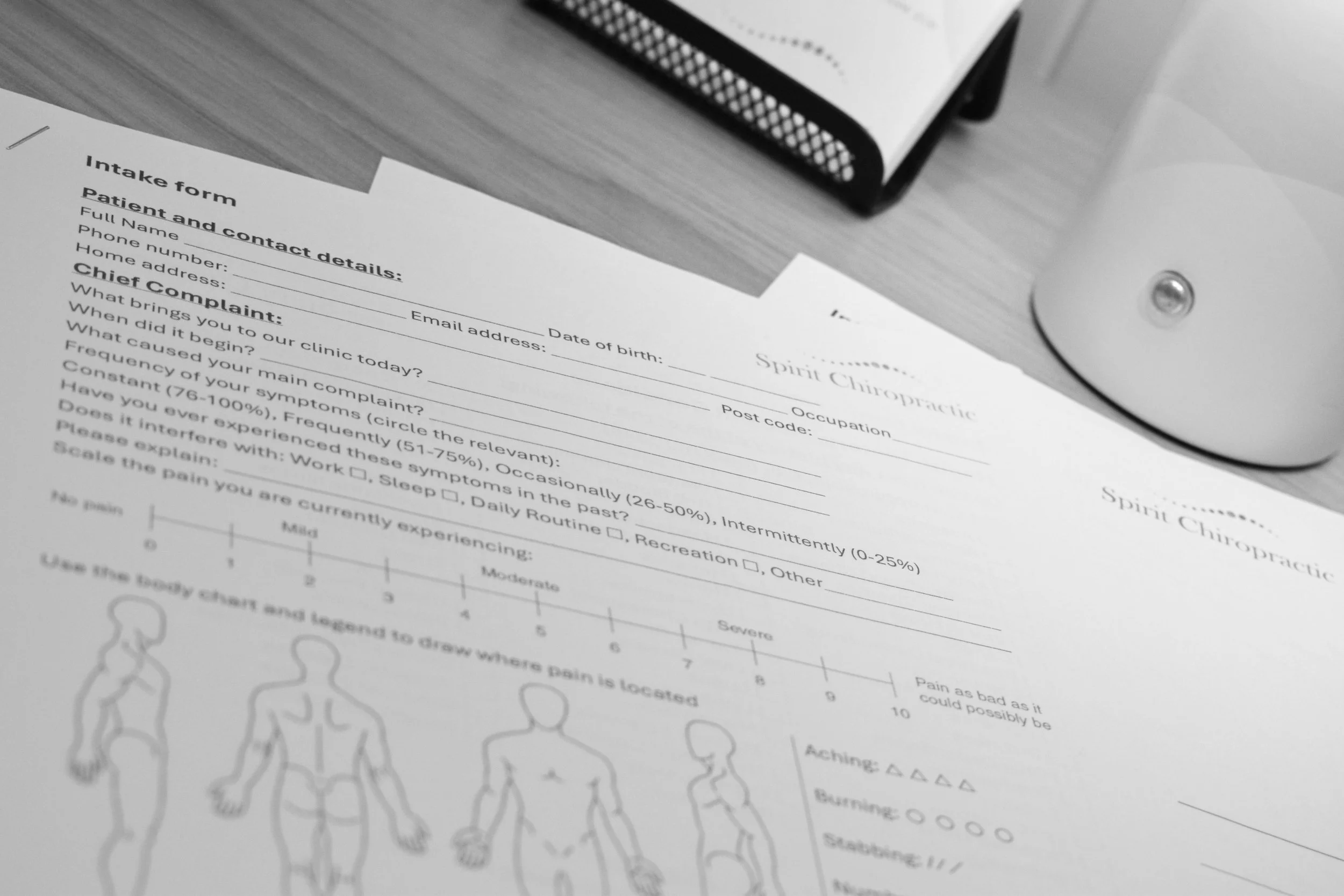
Detailed Medical History: We start by getting to know you—your symptoms, lifestyle, work habits, sleep patterns, past injuries, and overall health. This helps us understand the bigger picture and identify what may be contributing to your pain or headaches. Nothing is rushed; you’ll have time to explain everything in your own words.
Screen for Red flag: Your safety comes first. We screen for signs that may indicate a more serious underlying condition inducing headaches. These are uncommon, but important to rule out. If anything concerning appears, we’ll explain it clearly and arrange the appropriate emergency or medical referral.
Cervical spine Movement and Postural assessment: We assess how your neck moves—flexion, extension, rotation, and side‑bending—and observe your posture in sitting and standing. This helps us understand which joints, muscles, or movement patterns may be contributing to your symptoms. You’ll get simple explanations and visuals so everything makes sense.
Orthopeadic examination:We use specific movement and loading tests to understand how your joints, discs, ligaments, and muscles are functioning. These assessments help identify what may be irritated, restricted, or contributing to your symptoms. You’ll be talked through each step so you always understand what’s being checked and why.
Neurological examination:We assess how well your nerves are functioning by checking reflexes, sensation, coordination, and muscle activation. This helps us understand whether your symptoms are coming from nerve irritation, compression, or altered signalling. Each test is explained as we go so you always understand what the findings mean for your care.
If indication is sleep related headaches a sleep test might be requested: If your symptoms suggest your headaches may be linked to poor sleep, snoring, or airway restriction, we’ll discuss whether a sleep test is appropriate. A sleep study can help identify issues like obstructive sleep apnoea or disrupted breathing patterns that may contribute to morning headaches, neck tension, or fatigue.
If a test is recommended, we’ll guide you through the process and coordinate with accredited sleep technician and specialists.

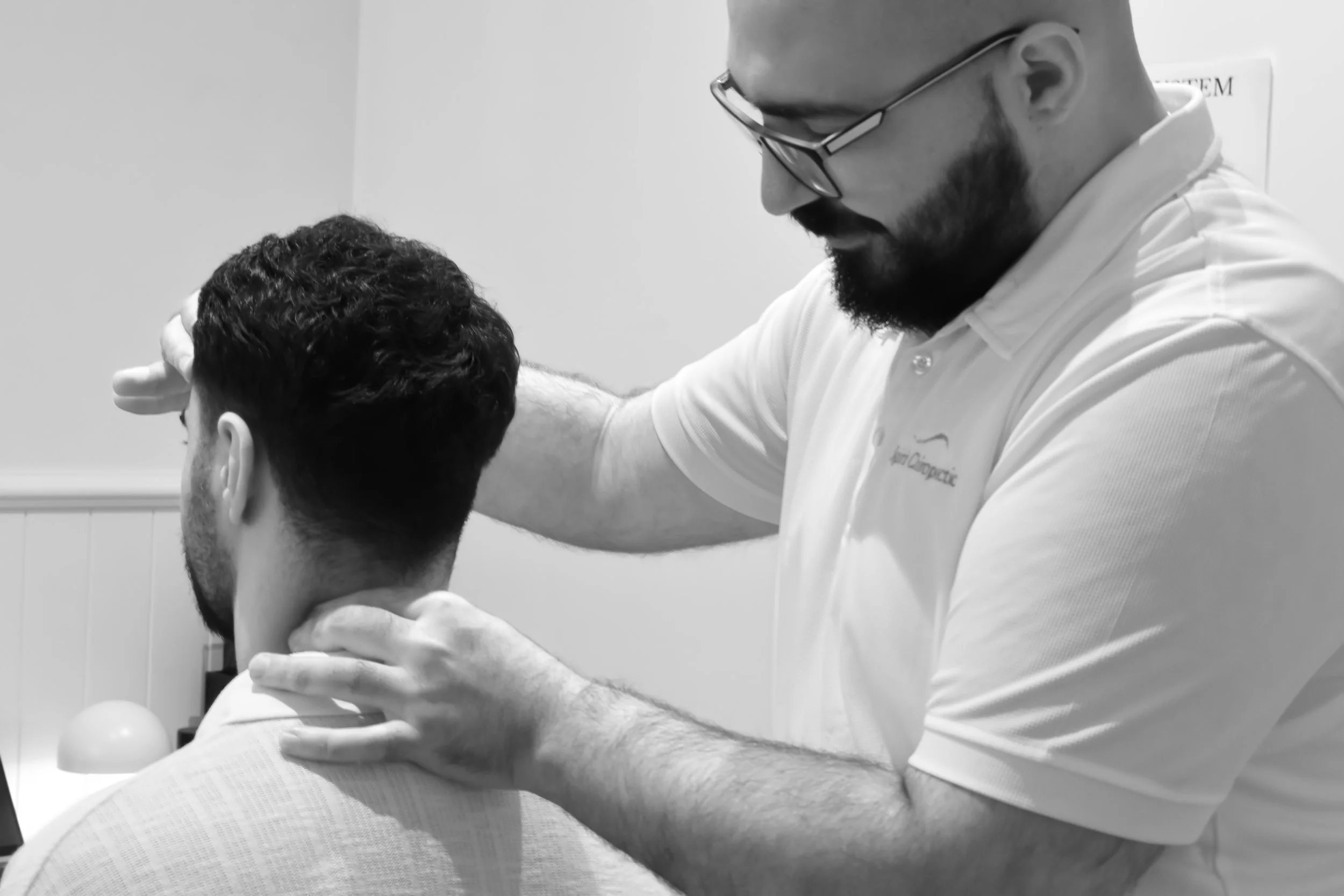
Chiropractic management focuses on reducing musculoskeletal contributors, improving movement by reducing inteference in your nervous system. The dose, frequency and modality to manage the headache type works favourably when it is based on guidelines.
Chiropractic Care includes the following:
Spinal mobilisation low force technqiue as a form of passive care that promotes movement in the neck and release of muscles.
Spinal adjustments known as high velocity low amplitiude thrust HVLA.
PIR & PNF muscle release technique gentle approach to increase mobility.
Postural and ergonomic strategies
Rehabilitation training
Education on triggers and self‑management
How Can Chiropractic Care Help You?
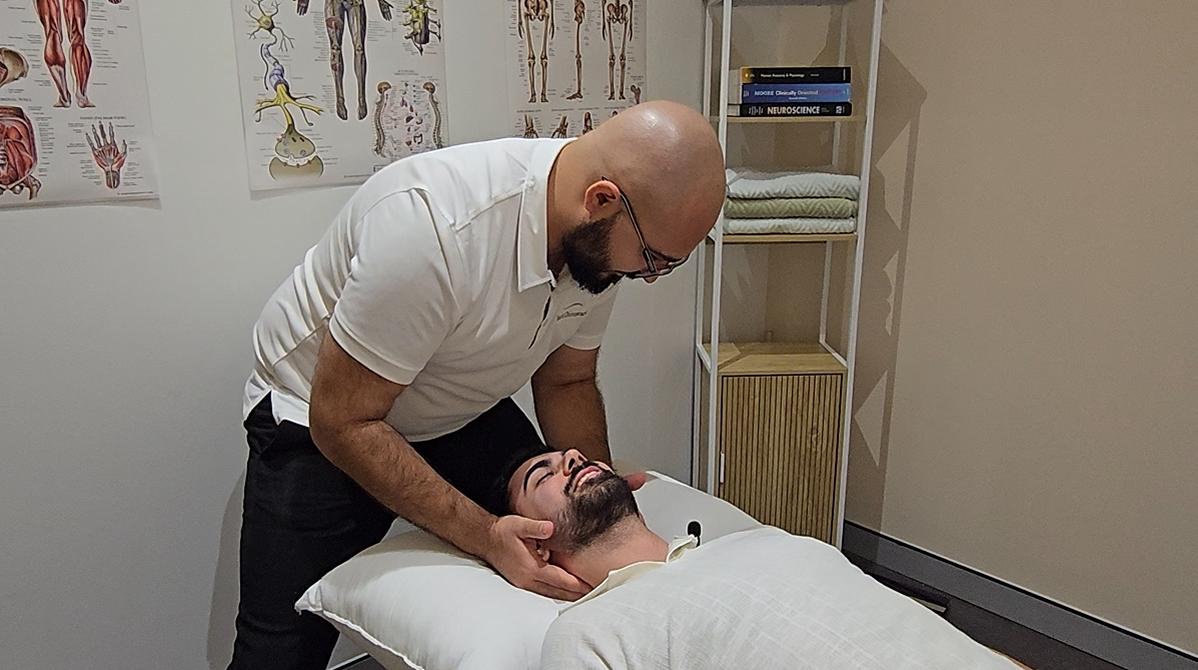
Example of cervical spine adjustment
Tension‑Type Headache (episodic & chronic): PRIMARY
Episodic tension type headache: spinal adjustment is not recommended. Low load craniocervical mobilisation is recommended.
Chronic tension type headache: evidence support multimodel approach of carniocervical mobilisation, rehabilitation and lifestyle changes for long term management.
Recomendation: low-load craniocervical mobilisation 10 minutes, 2x per day for 6 weeks, then at least 2x per week for 6 months
Migraine: PRIMARY
Patient with migraine evidence limited to moderate support spinal adjustment to manage episodic or chronic migraine with or without aura.
Recomendation: treatment frequency 1-2x per week for 8 weeks, plus weekly massage focus on neuromuscular and triger point framework of shoulder, neck and head.
Cervicogenic Headache: SECONDARY
It is a result of irritation in cervical facet joints, disc or soft tissue dysfunction. There is strong evidence supporting spinal adjustment for cervicogenic headache. Combinging mobilisation and deep neck flexor strengthening to manage this type of headache is recommended as it may benefit those patients with weak deep neck flexors.
Recomendation: spinal adjustment 2x per week for 3 weeks and joint mobilisation 8-12 treatments over 6 weeks.
The recommendation to manage these 3 types of headache is following the Clinical Practice Guideline
Sometimes co-existing headaches can present and each type needs to be diagnosed and managed appropiately.
Resources and References
Bryans R, Descarreaux M, Duranleau M, Marcoux H, Potter B, Ruegg R, et al. Evidence‑based guidelines for the chiropractic treatment of adults with headache. J Manipulative Physiol Ther. 2011;34(5):274‑89.
Castien RF, van der Windt DA, Grooten A, Dekker J. Effectiveness of manual therapy for chronic tension‑type headache: a pragmatic, randomised, clinical trial. Cephalalgia. 2011;31(2):133–143.
Kamonseki DH, Lopes EP, van der Meer HA, Calixtre LB. Effectiveness of manual therapy in patients with tension‑type headache: a systematic review and meta‑analysis. Disabil Rehabil. 2020;44(10):1780‑1789. doi:10.1080/09638288.2020.1813817.
Muñoz‑Gómez E, Inglés M, Serra‑Añó P, Espí‑López GV. Effectiveness of a manual therapy protocol based on articulatory techniques in migraine patients: a randomized controlled trial. Musculoskelet Sci Pract. 2021;54:102386.
Muñoz‑Gómez E, Serra‑Añó P, Mollà‑Casanova S, Sempere‑Rubio N, Aguilar‑Rodríguez M, Espí‑López GV, et al. Potential add‑on effects of manual therapy techniques in migraine patients: a randomised controlled trial. J Clin Med. 2022;11(16):4686.
Xu X, Ling Y. Comparative safety and efficacy of manual therapy interventions for cervicogenic headache: a systematic review and network meta-analysis. Front Neurol. 2025;16:1566764. doi:10.3389/fneur.2025.1566764
EMERGENCY SIGNS
If you suddenly start developing a severe “worst ever” headache, dizziness, vomiting, changes in vision, numbness, or trouble swallowing, these symptoms require urgent medical care. Please call 000 — do not book a chiropractic appointment.
or
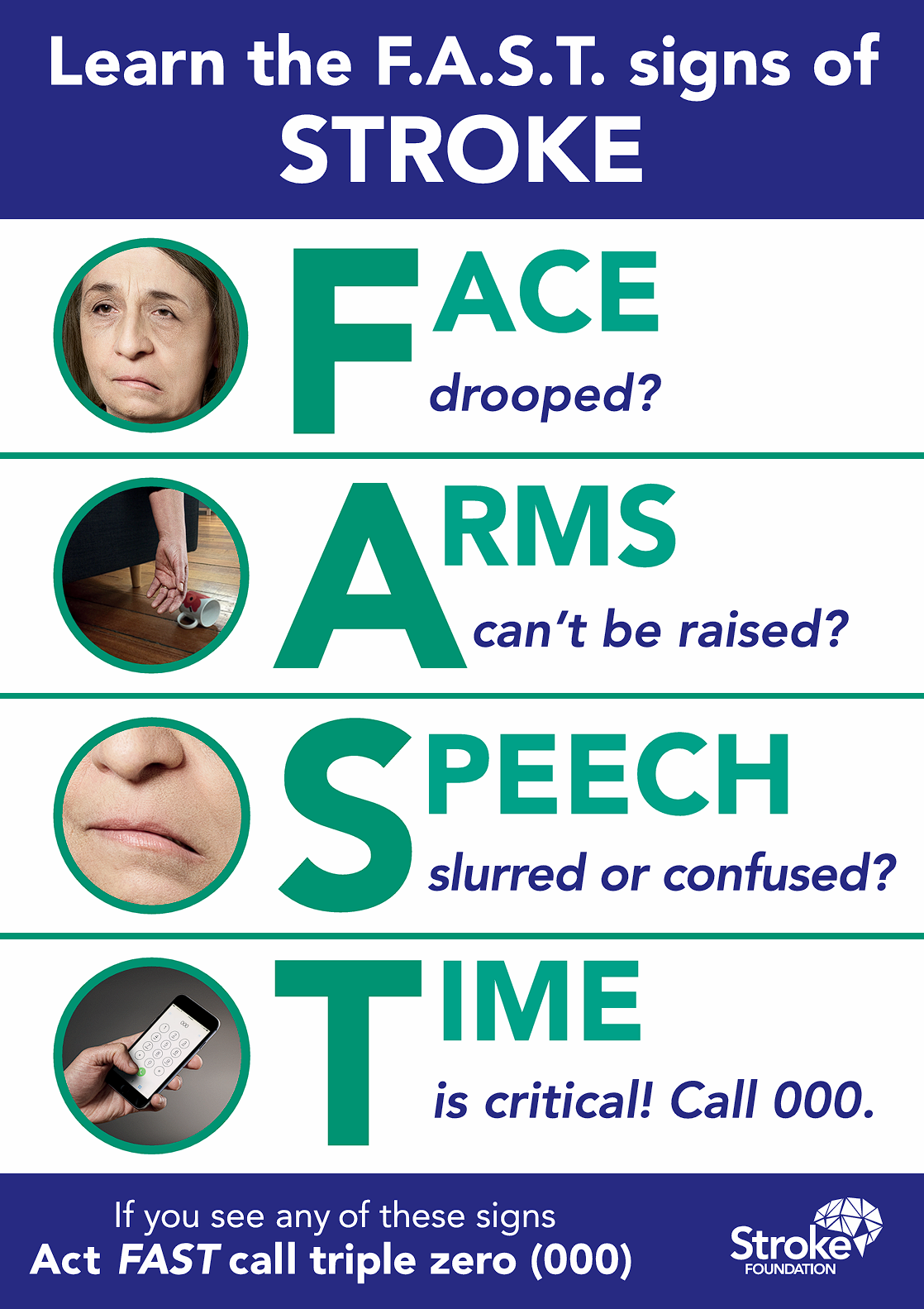
The Stroke Foundation uses the F.A.S.T. test to help people recognise the most common signs of stroke:
Face: Look at their face — is one side drooping?
Arms: Ask them to lift both arms — does one drift down?
Speech: Is their speech slurred or hard to understand?
Time: Time is critical. If you notice any of these signs, call 000 immediately.