
Chiropractic Intervention Taking Long?
A realistic perspective
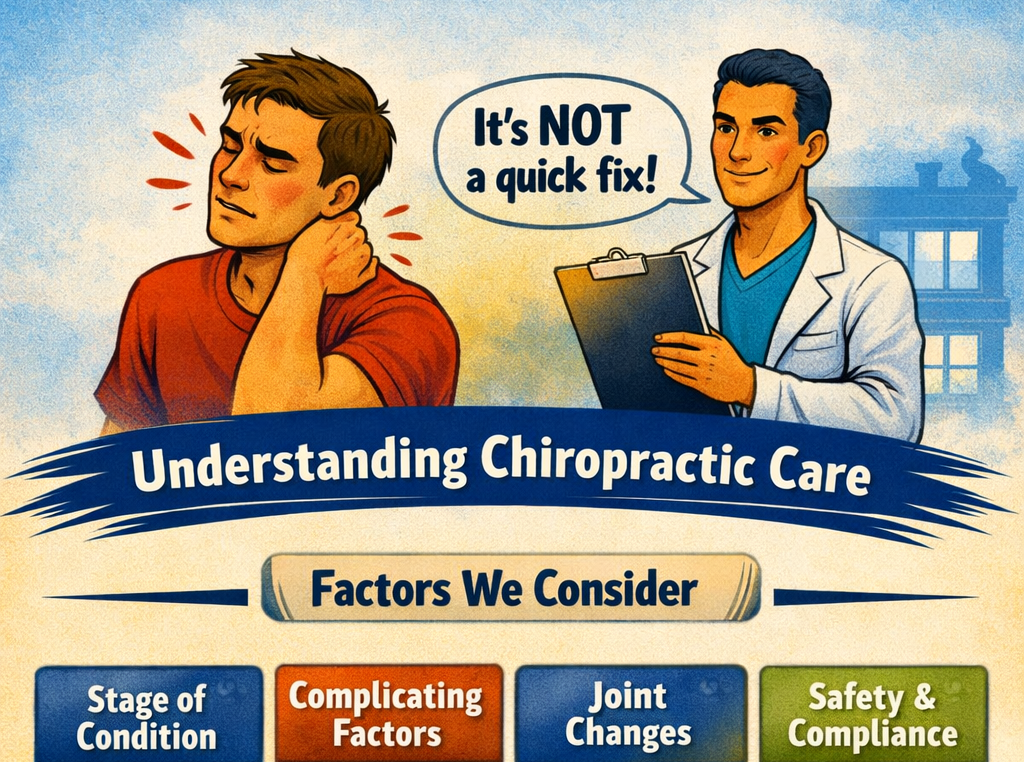
Not everyone but it is common that people arrive at a chiropractic clinic expecting a “one‑stop, fix‑all” solution—usually after they’ve exhausted every other modality. By the time they walk through our doors, their expectations are steep, their patience is thin, and their condition is often already chronic.
When we explain the method, the steps, and the changes required to address the actual cause of the problem. Its can get quite complex and it takes time to address it.
Cost and Therapy Outcomes
When we outline a care plan, we consider several clinical factors—assuming it’s a condition we are able to manage.
1. Stage of the condition
Acute
Subacute
Chronic
2. Complicating factors
Modifiable: lifestyle, ergonomics, activity level
Non‑modifiable: age, structural changes, long‑standing degeneration
3. Biomechanical changes
Diseased or irritated joints move and feel different from healthy joints. This affects how we adjust and how quickly the body responds.
4. Safety considerations
Depending on the patient’s health, we may:
modify the adjustment
choose a gentler technique
avoid adjusting entirely and use other modalities
5. Compliance with active care
This is often the biggest hurdle. If a patient is unwilling to do basic movement or exercises, progress slows dramatically.
Why we say 4, 8, 12, or 16 weeks
These timeframes aren’t random. They’re based on:
the stage of the condition
complicating factors
tissue healing timelines
how long it takes to reach the patient’s goals
expected drop‑off in exercise compliance after treatment ends
Depending on the case, a full course of care may range from $600–$3000.
Consistency directly affects outcomes. Many people believe that once an adjustment is done, the issue is “cured.” That’s a major misconception. Understanding the purpose of an adjustment is essential.
Let’s clarify a few important points
Chiropractic does not “cure” conditions.
Adjustments restore mobility to joints that are restricted or not moving well.
Your body does the healing—an adjustment simply creates the environment for it.
Warmth after an adjustment is increased blood flow to a previously compromised region.
We are not medical doctors. Our training is different, but we are qualified to diagnose musculoskeletal conditions and manage or refer appropriately.
Evidence‑based care works best. Research consistently shows that outcomes improve when passive care (adjustments, manual therapy) is combined with active care (exercise, movement, lifestyle strategies).
The reality
The process is complex. Human anatomy and physiology are unforgiving when we try to navigate the best course of treatment. But with clear communication, realistic expectations, and consistent care, patients can achieve strong, meaningful, long‑term outcomes.