
Lower Back Pain
Lower back pain is a common musculoskeletal issue that many people experience at different stages of life. It can influence how comfortably you bend, lift, walk, sit, or sleep, and may affect day‑to‑day activities. Although the pain is felt in the lower back, the reasons behind it can vary, which is why a thorough assessment is important to guide appropriate management or referral.
What is it? Well lets break it down.
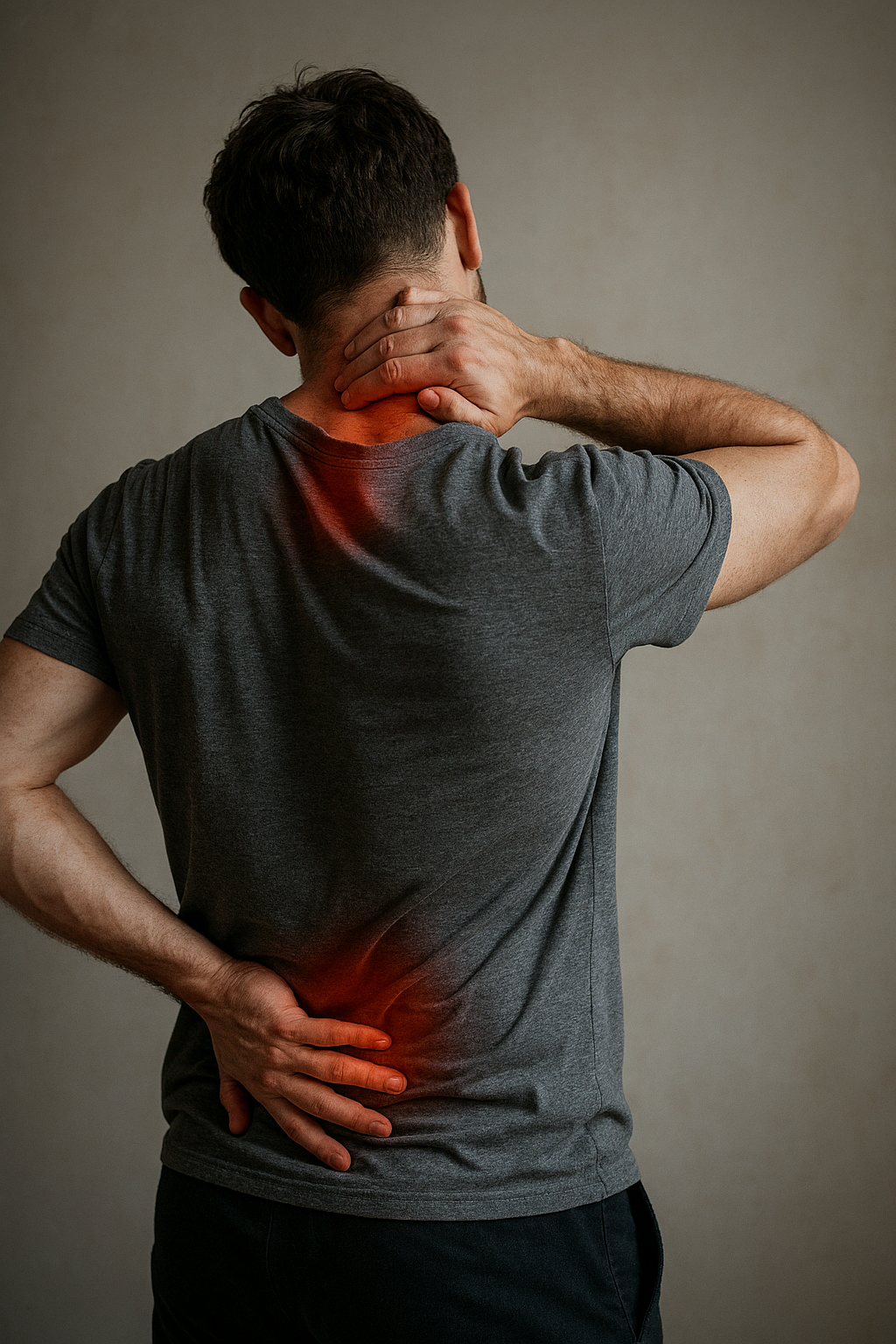
Lower back pain simply means the structures in your lower spine — the joints, discs, muscles, ligaments, or nearby nerves — are feeling irritated or overloaded. This part of your body works hard every day. It carries your weight, absorbs shock when you move, and helps you bend, twist, and stay upright. Because it does so much, it’s also one of the easiest areas to strain or overwork.
When those tissues get a bit compressed, tight, or stressed, they can send out pain signals to let you know they need a break, some support, or a change in how they’re being used.
Lower back pain can be grouped into mechanical vs non‑mechanical causes.
Mechanical Causes (most common)
Facet joint irritation
Disc irritation or annular strain (non‑serious)
Muscle strain or overload
Sacroiliac joint dysfunction
Postural fatigue (sitting, bending, lifting)
Movement pattern dysfunction
Referred pain from hips or thoracic spine
Stress‑related muscle tension
Non‑Mechanical Causes (less common but important to rule out)
Inflammatory conditions (e.g., ankylosing spondylitis)
Infection
Fracture (trauma or osteoporosis)
Visceral referral (kidney, abdominal, pelvic)
Tumour or systemic disease
Vascular (abdominal aorta)
Which types pain can chiropractic care help with?
All the mechanical and co-manage some of systemic causes.
Lumbar Facet Joint Irritation
Localised, sharp or aching pain that worsens with extension, twisting, or prolonged standing. Often described as “pinching,” “catching,” or “locking.”
Disc‑Related Pain (depending on severity of disc herniation)
Deep, aching pain that may radiate into the buttock, hip, or thigh. Often aggravated by sitting, bending, or lifting.
Muscle Strain & Postural Overload
A dull, tight, fatigued feeling across the lower back. Common in desk workers, manual workers, and people under stress.
Sacroiliac Joint Dysfunction
Pain on one side of the lower back or buttock, often aggravated by standing, walking, or transitional movements.
Movement Pattern Dysfunction
Pain caused by poor hip mobility, weak glutes, or overactive lumbar extensors. Often seen in gym‑goers, runners, and people with sedentary jobs.
Common Symptoms
Aching, sharp, or tight pain in the lower back Your lower back may feel sore, pinchy, or tight, and the intensity can change with movement.
Pain that spreads into the buttock or thigh Sometimes the irritation travels down into the hip, buttock, or upper leg.
Stiffness after sitting or waking You might feel “stuck” or slow to move when you first get up or after sitting for a while.
Pain with bending, lifting, or twisting Movements that load or rotate the spine can make the pain flare or feel sharper.
Muscle spasms The muscles around the area can tighten or “grab,” making it hard to move comfortably.
Difficulty standing upright or moving freely Your back may feel locked, guarded, or tilted, making everyday movements feel awkward or restricted.
Common Triggers
Prolonged sitting or slouching When you stay in one position too long — especially slumped over — the lower back gets stiff and irritated.
Poor lifting technique Lifting with your back instead of your legs can overload the joints and muscles in your lower spine.
Repetitive bending Bending over again and again (like picking things up or doing housework) can gradually irritate the tissues in your back.
Weak core or glute muscles When the muscles that support your spine aren’t doing their job well, your lower back ends up working harder than it should.
Stress and muscle tension Stress makes your body tighten up, especially around the neck, shoulders, and lower back, which can make pain feel worse.
Sudden awkward movement A quick twist, reach, or unexpected movement can catch the joints or muscles off‑guard and cause a flare‑up.
Reduced hip or thoracic mobility If your hips or upper back are stiff, your lower back has to compensate — and that extra workload can lead to pain.
Signs, Symptoms and Triggers?
How Do We Assess it?
Detailed Medical History
We take time to understand your symptoms, work demands, exercise habits, sleep, stress levels, and previous injuries. This helps identify the true drivers of your pain.
Screen for Red Flags
Your safety comes first. We screen for signs of non‑mechanical or serious causes of lower back pain. If anything concerning appears, we’ll explain it clearly and arrange appropriate referral.
Lumbar Spine Movement Assessment
We assess how your lower back moves — flexion, extension, rotation, side‑bending — and evaluate which movements reproduce or relieve symptoms.
Postural & Functional Assessment
We observe your posture, hip mobility, glute activation, and movement patterns during bending, lifting, and transitional movements.
Orthopaedic Examination
Specific tests help determine whether joints, discs, ligaments, or muscles are contributing to your symptoms. You’ll be guided through each step with clear explanations.
Neurological Screening (if indicated)
We check reflexes, sensation, strength, and nerve tension if symptoms suggest nerve involvement.
Pelvic & Hip Assessment
Lower back pain often coexists with hip or sacroiliac dysfunction. We assess these regions to ensure nothing is missed.
How Can Chiropractic Care Help You?
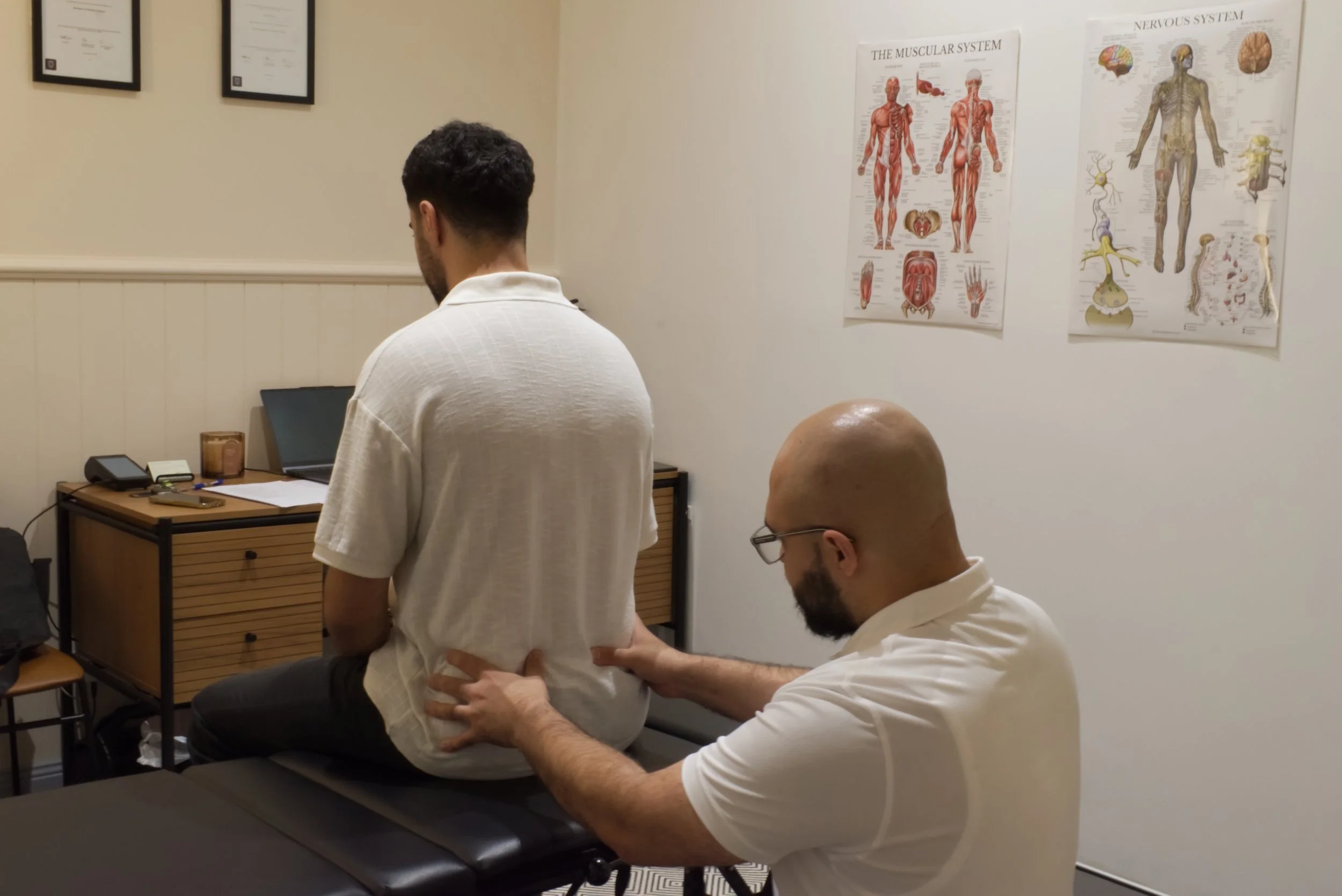
Lumbar spinal mobilisation (gentle, low‑force techniques) These are slow, comfortable movements that help the lower back joints loosen up and move more freely.
Spinal adjustments (HVLA) for joint restriction A quick, precise movement to a stiff joint to help it move better and reduce irritation.
PIR & PNF muscle release techniques Gentle stretching and muscle‑activation methods that help tight muscles relax and switch off protective tension.
Sacroiliac joint mobilisation Targeted, low‑force movements to help the SI joints glide better and reduce pressure in the lower back and pelvis.
Postural and ergonomic strategies Simple changes to how you sit, stand, lift, or set up your workspace to reduce strain on your back.
Rehabilitation training (core, glutes, hip mobility) Exercises that strengthen the muscles supporting your spine and improve the way your hips and pelvis move.
Education on triggers and self‑management Helping you understand what sets your pain off, what calms it down, and how to manage flare‑ups confidently at home.
-
Freitas JP, Corrêa LA, Bittencourt JV, Armstrong KM, Meziat‑Filho N, Nogueira LAC. One spinal manipulation session reduces local pain sensitivity but does not affect postural stability in individuals with chronic low back pain: a randomised, placebo‑controlled trial. Chiropr Man Therap. 2024;32:20.
Goertz CM, Long CR, Vining RD, Pohlman KA, Walter J, Coulter I, et al. Effect of usual medical care plus chiropractic care vs usual medical care alone on pain and disability among US service members with low back pain: a comparative effectiveness clinical trial. JAMA Netw Open. 2018;1(1):e180105.
Nim CG, Weber KA, Kawchuk GN, O’Neill S. Spinal manipulation and modulation of pain sensitivity in persistent low back pain: a secondary cluster analysis of a randomized trial. Chiropr Man Therap. 2021;29:10.
Rubinstein SM, de Zoete A, van Middelkoop M, Assendelft WJJ, de Boer MR, van Tulder MW. Benefits and harms of spinal manipulative therapy for chronic low back pain: a systematic review and meta‑analysis. BMJ. 2019;364:l689.
Traeger AC, Buchbinder R, Elshaug AG, Croft PR, Maher CG. Care for low back pain: can health systems deliver? Best Pract Res Clin Rheumatol. 2019;33(3):477‑490.